External inspection: what can be established without emptying anything
An external inspection happens with the tank full and earning. It answers a real set of questions cheaply, and it cannot answer the one about the floor. Knowing exactly where that line falls is what stops an external inspection from being oversold.
What it covers
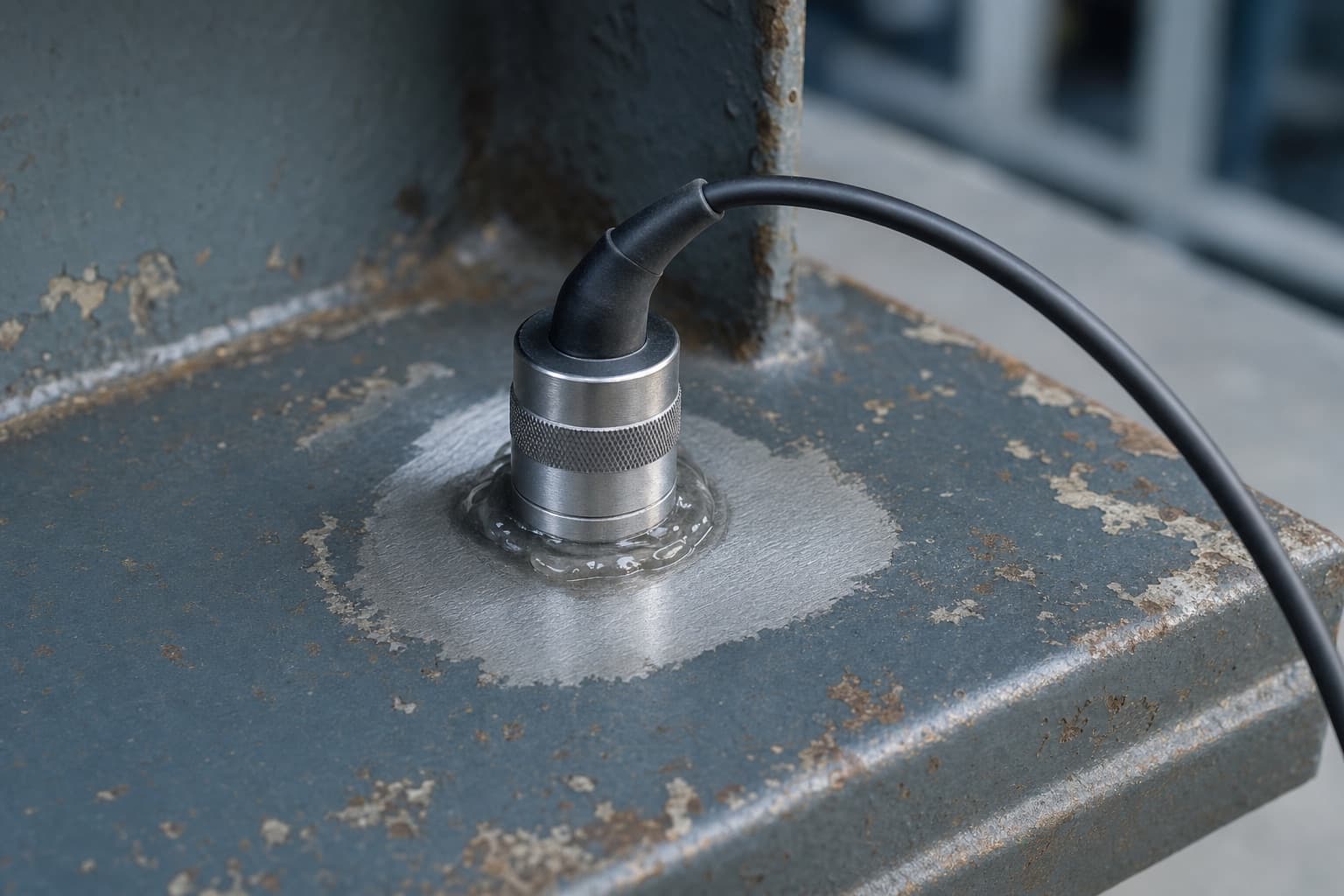
- Shell condition and coating, course by course, with ultrasonic thickness readings taken from outside.
- Foundation, ringwall, chime area and drainage, plus settlement measurement where it is scheduled.
- Roof condition from the outside, vents, gauging equipment, nozzles and manways.
- Appurtenances: stairways, platforms, handrails, grounding, insulation condition.
- Containment: bund integrity, drain valves, and whether the secondary containment would actually contain.
- Evidence of leakage, staining, past repairs and anything that changed since the last visit.
That is a substantial list, it needs no outage, and it is where a competent inspector earns their fee by noticing things that have been in plain sight for two years.
What it cannot establish
The floor. Its underside in particular, which is where aboveground tanks most often lose metal. No amount of external work resolves that question, and a report that implies otherwise should be read again carefully.
In-service screening methods exist, acoustic techniques and robotic tools that work through the product, and they are genuinely useful. What they buy is a better answer to “does this tank need to be opened next year or in five years”, not a replacement for opening it. See NDT methods.
Getting more out of the cheap inspection
- Ask for thickness readings at fixed, marked, repeatable locations, the value is in the trend, and the trend needs the same points.
- Ask for the same photographs each time, from the same positions. Change is what you are buying.
- Include settlement measurement on a schedule, not only when something looks wrong.
- Have the report separate conditions from recommendations, so a budget conversation does not turn into an interpretation argument.
- Keep the previous report in the hands of the inspector doing this one. It is astonishing how often nobody does.
None of this costs more than asking. All of it is what turns a series of one-off visits into a dataset that supports a defensible interval.
Frequently asked
Can an external inspection extend our internal interval?
Indirectly. It contributes corrosion-rate data and condition information that feed the evaluation, and the evaluation determines the interval, see integrity assessment.
Do we need scaffolding for an external inspection?
It depends on the readings required and on the access already fitted to the tank. Rope access, lifts and drones each cover part of the problem; ultrasonic readings still need contact with the steel.
Are drone inspections a substitute?
For visual coverage of high or awkward areas, they are a real improvement. For thickness measurement and for anything requiring contact or entry, they are not a substitute.
Last reviewed July 29, 2026.
Scope an external inspection worth repeating
Marked reading locations, consistent photography, settlement on a schedule. Request an inspection quote and providers can quote a programme rather than a visit.
Steel Tank Inspection carries out API 653 and STI SP001 inspections on welded steel storage tanks: external and internal examinations, ultrasonic thickness readings, bottom evaluation, and the report the standard requires.