Internal inspection: the tank has to be empty, clean and entered
An internal inspection means the tank is emptied, cleaned, ventilated and entered by people. It is the most expensive thing you will do to a tank short of repairing it, and it is the only way to establish the condition of the floor.
What it establishes that nothing else can
- Floor condition, top and, by scanning, bottom side, including the critical zone near the shell.
- Internal lining condition, adhesion and holidays.
- Underside of the roof and its supports, where vapour-space corrosion concentrates.
- The lower shell and the shell-to-floor weld, from the side nobody can reach in service.
- Internal appurtenances: heating coils, mixers, internal piping, floating roof legs and seals.
None of these can be measured from outside with any confidence. That is the whole justification for the cost, and it is worth stating plainly when the outage is being argued over internally.
Everything that has to happen before an inspector steps inside
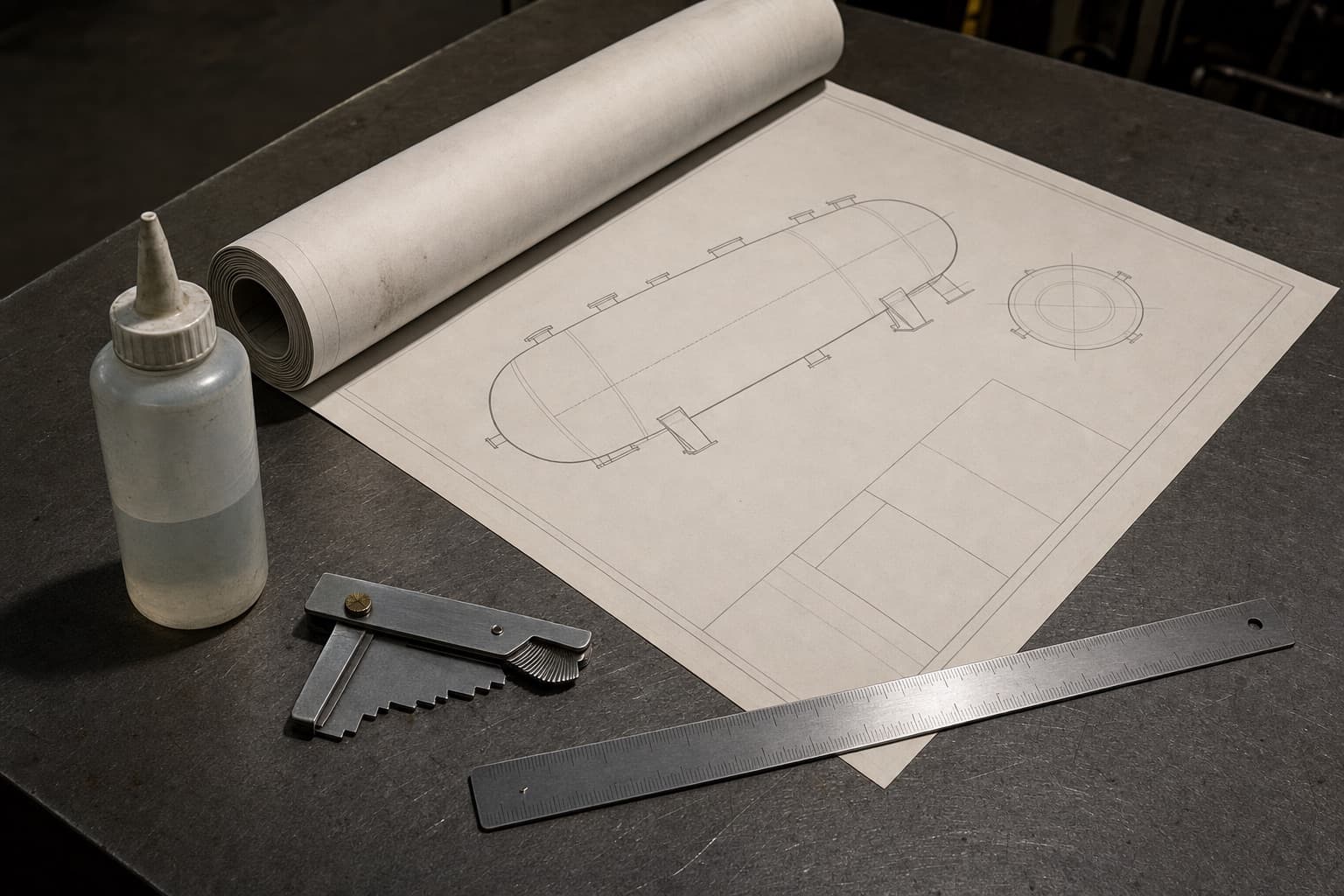
- Product removal, and somewhere for the product to go, which on a working terminal is a commercial problem before it is a technical one.
- Cleaning and sludge removal, then degassing to a condition safe for entry.
- Waste characterization and disposal, which can be the single largest line item.
- Isolation, blinding, lock-out and a confined space entry plan with rescue provision.
- Access: scaffolding, lighting, ventilation, and a route for equipment.
- Only then, the inspection itself.
What happens inside
Once the tank is safe to enter, the work is methodical rather than dramatic: visual examination against a checklist, thickness readings at defined locations, scanning of the floor, examination of welds, and evaluation of the lining and internal fittings.
The floor scan is the item to protect in the scope. Coverage percentage, method and the treatment of the critical zone are the three parameters that decide whether the data will support a defensible evaluation, see NDT methods.
The decision that follows
An internal inspection almost always produces repair work. The commercially important question is whether that work can be done during the same outage, because a second outage costs the emptying, the cleaning and the lost service all over again.
The practical answer is to plan for it: have a repair contractor available, have a mechanism for approving work quickly, and know in advance who signs off an engineering evaluation. Sites that do this finish in one outage. Sites that do not, discover a floor finding on day four and then wait three weeks for a decision.
Frequently asked
How long does an internal inspection take?
The inspection is usually days. The project around it is usually weeks to months, dominated by cleaning, waste and repairs, see planning the work.
Can we skip cleaning and just look?
No. A floor covered in sludge cannot be scanned, cannot be measured and cannot be entered safely. Cleaning is not preparation for the inspection; it is part of it.
Who is responsible for confined space entry?
The employer of the people entering, under occupational safety regulations, in coordination with the facility. It is a contractual question worth settling in writing before mobilization, not on the day.
Last reviewed July 29, 2026.
Plan the internal inspection as a project
Tank, product, cleaning status and the outage window you have. Providers who do this work quote the whole sequence rather than the inspection alone.
Steel Tank Inspection carries out API 653 and STI SP001 inspections on welded steel storage tanks: external and internal examinations, ultrasonic thickness readings, bottom evaluation, and the report the standard requires.