Integrity assessment: turning readings into decisions somebody will sign
Readings are not a conclusion. The assessment is where thickness data, corrosion rates and findings become a repair list, a remaining-life figure and a next inspection date that somebody is prepared to sign. It is also the half of the deliverable that varies most between providers.
From measurement to decision
The chain is short and every link is a place where quality shows.
- Measured thickness at defined locations, with the previous values for the same locations.
- Corrosion rates derived from the difference over the elapsed time, which requires that the locations really are the same.
- Remaining thickness compared with a minimum determined for that component and that duty.
- Remaining life, and from it a next inspection date.
- A repair list, separating what must be done before return to service from what can wait.
Step two is where thin reports fall apart. Without positional data from the previous inspection, a corrosion rate has to be assumed rather than measured, and an assumed rate produces an assumed interval.
What varies between providers
- Whether an engineer reviews the data, or whether the technician's spreadsheet is the deliverable.
- Whether recommendations are separated from requirements, a distinction that matters enormously six months later in a budget meeting.
- Whether the basis of the next interval is stated and reproducible, or asserted.
- Whether the report is usable by a different provider next time, or is a proprietary format that quietly locks you in.
- Whether findings come with enough detail, location, extent, photographs, for a repair contractor to quote from them without a second visit.
The last point has direct money attached. A findings list that a repair contractor can price without re-entering the tank is worth a great deal more than one that says “floor plate thinning noted”.
Repairs: what the assessment triggers
Typical outcomes range from housekeeping to major work, and they should arrive sorted rather than as a list.
- Patch plates or plate replacement on the floor, including the critical zone near the shell.
- Shell repairs, which carry their own design and welding requirements.
- Coating or lining repair or replacement, often the highest-value preventive action available.
- Cathodic protection installation or repair.
- Appurtenance work: nozzles, manways, vents, stairways and platforms.
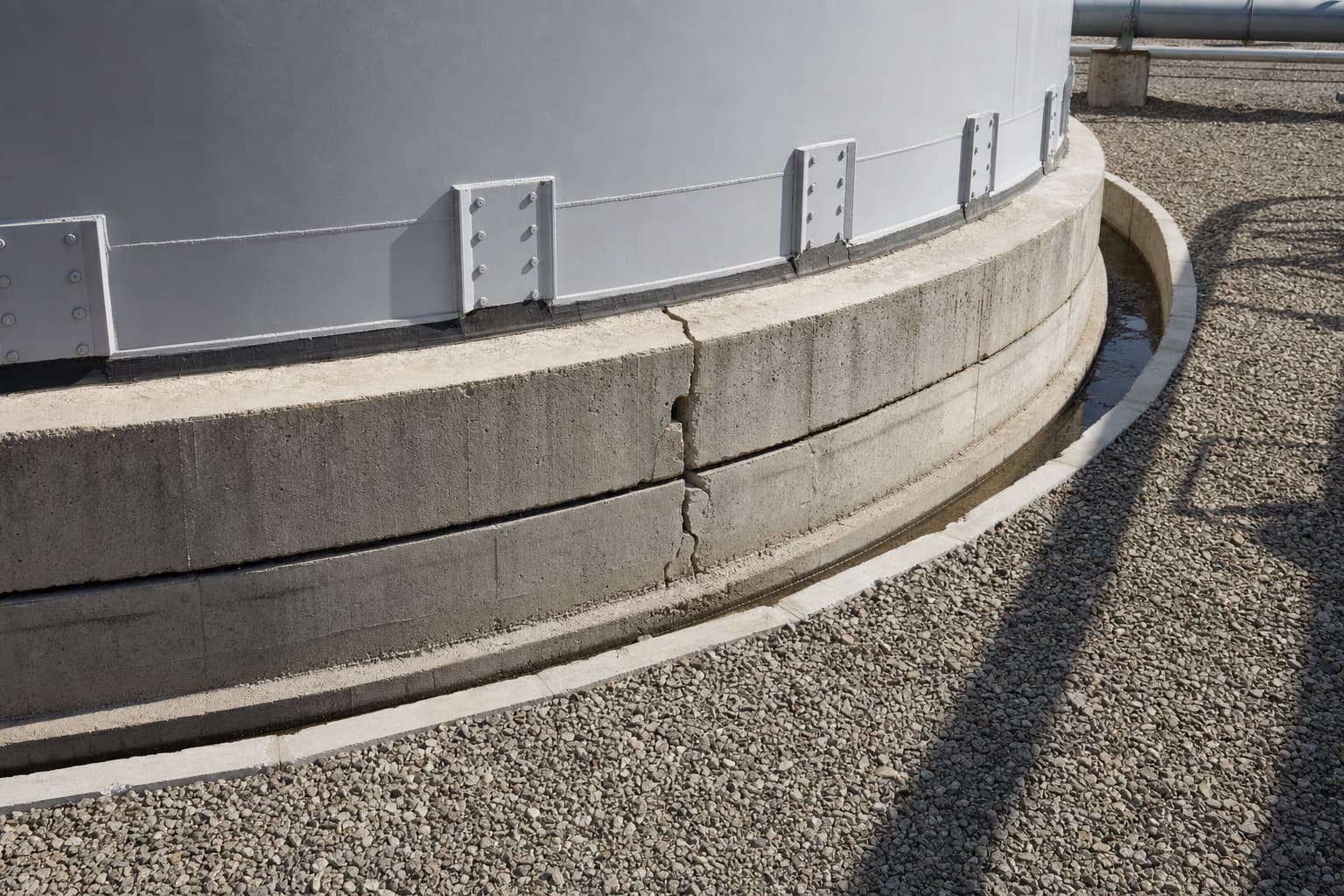
- Foundation work, where settlement or chime-area condition demands it.
Whether those repairs happen during the same outage is the largest single cost variable in the whole exercise, and it is decided by planning rather than by engineering, see planning the work.
What to ask for in the deliverable
- Data in a portable format, a spreadsheet you own, not only a bound report.
- Location conventions documented well enough for another provider to reuse them.
- The evaluation basis stated: what minimum was used, what corrosion rate, over what period.
- Findings with photographs and dimensions, sorted by urgency.
- An explicit statement of what was not inspected, and why.
Frequently asked
Who determines the next inspection date?
The evaluation does, performed by qualified personnel, on the basis of the data and the applicable standard. A date offered without a stated basis is a guess with a letterhead.
Can we challenge a finding?
You can ask for the evidence and the reasoning, which a good report already contains. Where a finding drives major expenditure, an independent review is a normal and proportionate step.
What if the tank cannot meet the minimum thickness?
Then the options are repair, a change of service, a derate, or retirement, and which of those is available is an engineering judgement, not a commercial preference.
Last reviewed July 29, 2026.
Related pages
Ask for the assessment, not just the readings
Request an inspection quote and the data you already hold. Providers who do the engineering half quote it explicitly, and those who do not become visible immediately.
Steel Tank Inspection carries out API 653 and STI SP001 inspections on welded steel storage tanks: external and internal examinations, ultrasonic thickness readings, bottom evaluation, and the report the standard requires.