Planning: the inspection is three days, the project is three months
The inspection is a few days. The project is a few months, and most of it belongs to other people: operations, waste, safety, procurement. This page sets out the order that keeps an outage window from slipping.
The sequence
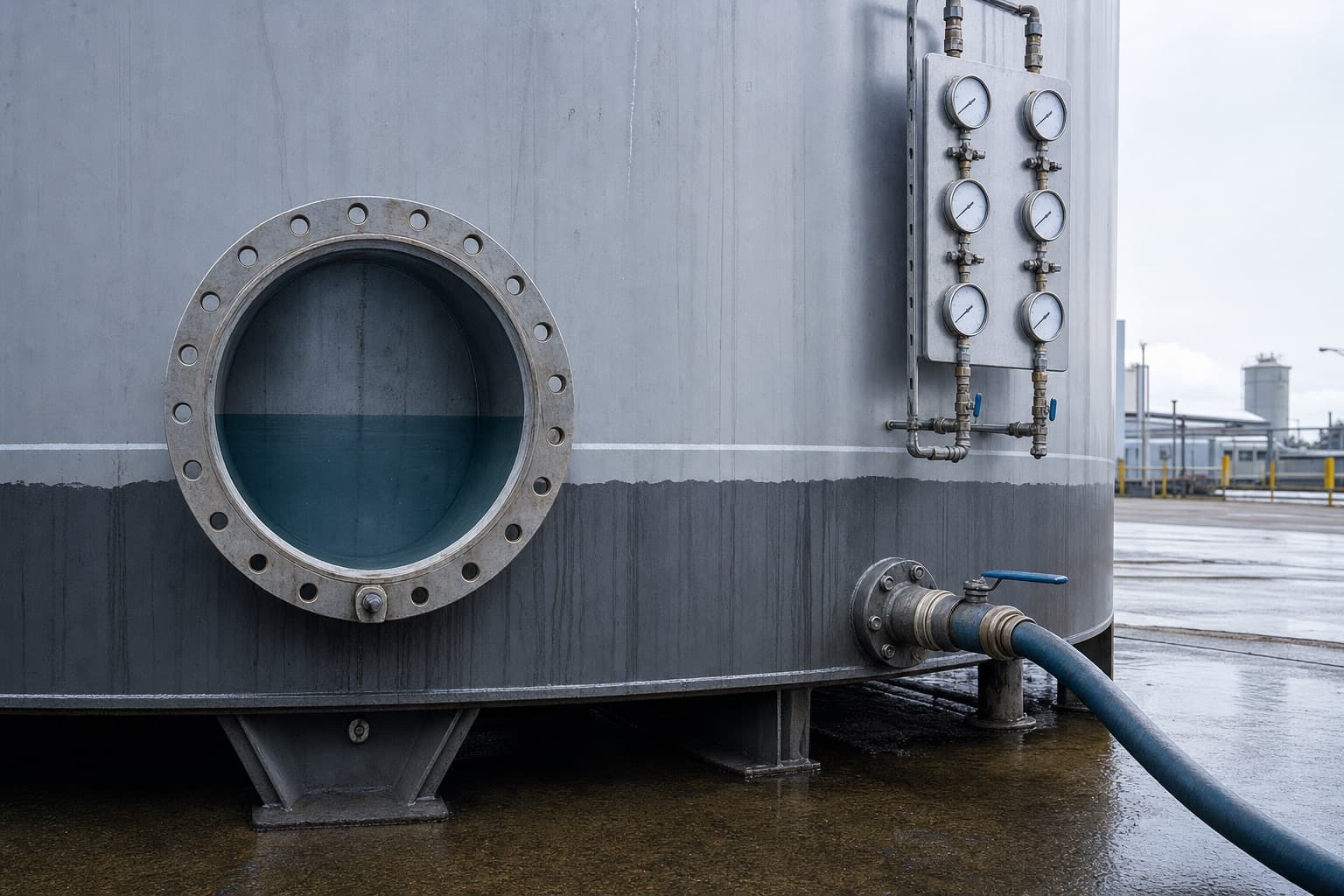
- Decide the scope, on paper, with coverage figures. Everything downstream is priced from this document.
- Establish where the product goes and what it costs to move or hold it.
- Characterize the expected waste and secure a disposal route. Long lead time, and a common cause of slippage.
- Procure cleaning, inspection and repair capability, ideally so that the repair contractor is available during the outage rather than after it.
- Prepare the safety scope: isolation, entry, rescue, hot work, and who holds each permit.
- Execute: empty, clean, degas, inspect, evaluate, repair, close, return to service.
- Close out: report, data, updated interval, and the actions that did not get done recorded somewhere they will be seen again.
The three things that most often slip
Waste
Characterization takes time, disposal routes have capacity limits, and the volume is never exactly what was estimated. Sites that start this conversation early rarely have an outage extended by it; sites that treat it as a detail routinely do.
The decision loop on found work
An inspection that finds a repairable condition creates a decision. If that decision needs three signatures and a capital request, the tank sits open while it is obtained. Pre-authorizing a contingency envelope is the single most effective planning measure available.
Access
Scaffolding is a trade with its own lead time and its own permits, and it is frequently discovered late because it is nobody's headline scope.
Safety scope, stated plainly
Tank entry work involves confined spaces, potentially hazardous atmospheres, isolation of connected systems, and often hot work in proximity to flammable service. Each has a regulatory framework and each has an owner.
The contractual question worth settling in writing, early: who is the entry employer, who provides rescue, and who holds each permit. Ambiguity there is discovered on the morning of entry, which is the worst possible moment.
Timing across the year
Two constraints usually collide. Operations wants the outage in the low-demand season; inspection and cleaning capacity is finite and books out in the same window for everybody.
Booking early, and being willing to take a slightly less convenient window, is frequently worth more than negotiating the rate. On multi-tank sites the same logic becomes a programme rather than a decision, see terminals and fleets.
Frequently asked
How far ahead should we plan an internal inspection?
Far enough for waste characterization and disposal, procurement and any long-lead repair materials, which in practice means months rather than weeks, and longer if the outage has to fit a seasonal window.
Should repairs be contracted with the inspection provider?
Sometimes, and it usually shortens the outage. Where independence matters, because the same party would be finding and selling the work, separating them and keeping both available is the cleaner arrangement.
What if the inspection finds nothing?
Then you have a documented baseline, a measured corrosion rate and a defensible interval , which is the outcome you were paying for. An inspection is not a failure when it finds no defect.
Last reviewed July 29, 2026.
Sequence the outage before booking it
Scope, cleaning, waste, access and the decision loop on found work. Request an inspection quote and providers can plan the project rather than the visit.
Steel Tank Inspection carries out API 653 and STI SP001 inspections on welded steel storage tanks: external and internal examinations, ultrasonic thickness readings, bottom evaluation, and the report the standard requires.